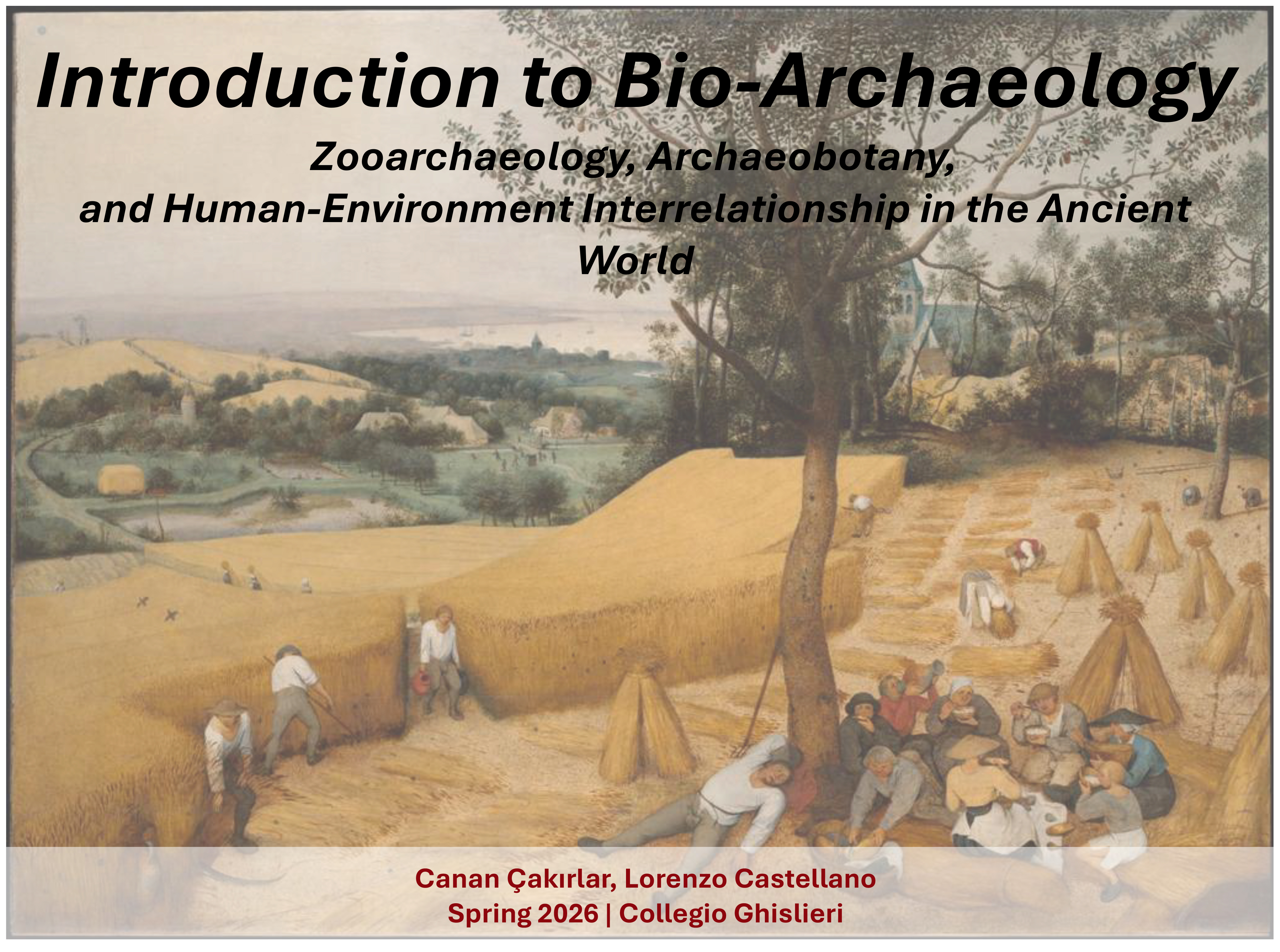
Contemporary archaeological research is markedly multidisciplinary in scope. The archaeological record encompasses more than just artifacts and structures — it also includes organic materials preserved within anthropogenic stratifications. Botanical and faunal remains are an abundant and ubiquitous component of these deposits, owing to the wide range of daily activities that rely on animal and plant resources. When properly sampled, processed, and analyzed, these "ecofacts" allow for the reconstruction of past agropastoral systems, diets, and paleoenvironments.
This course provides graduate students with an introduction to the methods of zooarchaeological and archaeobotanical research. The first two modules examine the main methodologies used in these fields, from sampling strategies to the interpretation of results. The third module draws on a selection of case studies to critically discuss research themes central to bio-archaeological research and environmental archaeology.
The course combines frontal lectures with seminar-style discussions. Study materials include textbooks and a selection of articles from peer-reviewed scientific journals.
- Enseignant: CANAN CAKIRLAR
- Enseignant: LORENZO CASTELLANO